Identity and integration of Piety and Letters
Lic. Virginia Montini, P. Andres Rodriguez, Sch. P.
Pious Schools of Córdoba (Argentina)
“The Calasanctian curriculum consists of a link with reality that develops intellectual and moral virtues. If there is a proper bond of knowledge and love, virtue is developed. The presence of moral and intellectual virtue favors, at the same time, true knowledge and well-ordered love.”
Piarist Educational Proposal 2021
In the journey of our Province, we began with the study and clarification of the principles from which the Piarist project is carried out. This was synthesized in a document that summarizes in the expression “Cooperators of the Truth that sets free” the content, the method and the objective of our schools. It was seen necessary to move forward together in the development of pedagogical means to turn the motto of Piety and Letters into an integral formative itinerary, which contributes in a joint and feedback way to the intellectual and moral character formation of our students. Faced with the challenges of today’s world and the concrete needs of our students, and with the commitment to keep alive the identity we have inherited, the following projects were developed:
- EDANI: Experience, Doctrine and Environment in the Kindergarten, a program based on classic tales and psychomotor experience.
- Trivium: learning to think, to speak, to write and to read and it is materialized in a sequence of reading books and exercises.
- Quadrivium: teaching mathematics as a liberal art, which seeks to teach about reality through experience, problem situations and collaborative work.
- Humanities: it brings students from 12 to 14 years old in contact with the cultural heritage of the West, so that they can incorporate these goods in the configuration of their own identity and exercise in the liberal arts.
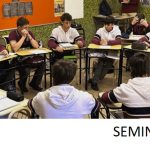
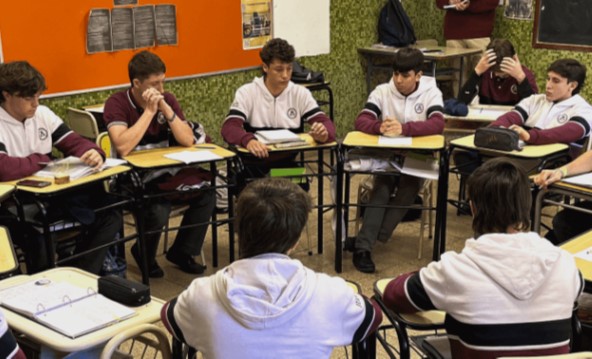
- Socratic Seminar: collaborative dialogue around valuable texts that allows for deep exploration of ideas and growth in intellectual and social skills.
- Piarist Pastoral Proposal: it gathers the elements of the tradition of the Pious Schools: proclamation and preaching centered on Jesus Christ, sacramental and prayer life, exercise of virtues, devotion to the Virgin Mary and the example of the saints.
- Piarist Project of Education for Love, Life, Affectivity and Sexuality: seeks to respond to the challenges faced in today’s world by our children and young people to live love to the fullest.
- Character building: a path of growth in moral virtues for each stage of the school path, with diagnostic instruments and didactic proposals.
- Service Learning: seeks the application of knowledge in the service of a real need to which the students commit themselves and to which they respond in intervention projects.
- Basic Library and Sustained Silent Reading: selection of books that express our Catholic, Western and Argentine identity and daily reading practice of valuable books at all educational levels.
But the true integration of Piety and Letters – synthesis of faith, life and culture, union of intellectual and moral formation, of theoretical and practical skills – must first take place in the educator, so that he can then transmit it to his students by means of a brief, simple and effective method. Calasanz already affirmed that “the good name of the schools depends on good educators” (San José de Calasanz, 30-11-1620). To achieve this, the Province of Argentina developed a series of teacher training programs that seek to make educators live the Pious Schools that we want children and young people to experience. This supposes direct contact with the realities that we have to propose to the students, based on a solid doctrine and in a carefully prepared environment.
- School of Christian Educators from the Piarist Charism: a three-semester training course for educators with on-site and distance instances that deepens in the theological and philosophical cores of our faith, in the foundations of the Calasanctian pedagogy and proposes the revision and improvement of their own teaching practices.
- Mentor School: a one-year formative course with on-site and distance instances, for young pastoral agents and those responsible for the Calasanz movement.
- Continuous Teacher Training programs : face-to-face and virtual synchronous courses, where tools are provided for the concrete application of the different curricular projects: PEEAVAS Course, Moral Character Building Course, Trivium Course and its didactics, Socratic Seminar course, among others.
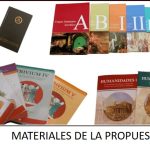
In order for these curricular projects to become a reality in the classroom, progress was made in the development of teaching materials and resources of various types for all educational levels, from reading books and exercises to concrete material and music.