School and Family: We’re a Great Team!
When school and family join forces, the classroom is transformed.
Lilibeth González – Cristo Rey School (Carora), Venezuela
Educating young people is not a race run alone, but a relay race, where communication and mutual support are essential for success. When both environments align, a shared responsibility emerges that enhances the student’s holistic development, combining education in human and Christian values with the emotional security of home and the academic knowledge and structured socialization of school.
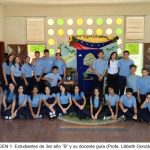
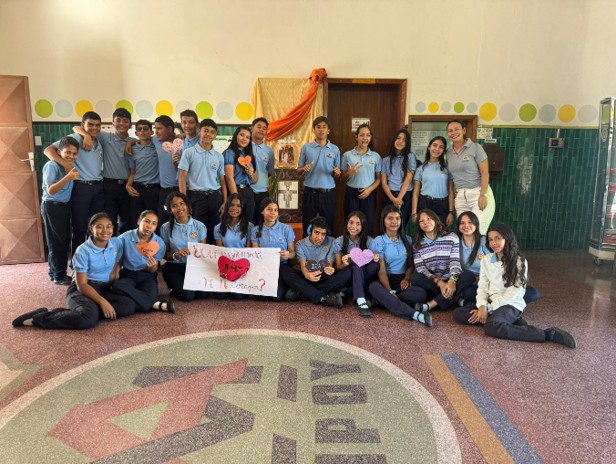
At Cristo Rey School in Carora, the support, trust, collaboration, communication, and identity of families are vital to continuing to provide a quality education; families serve as the primary learning environment where the spiritual, emotional, and social foundations necessary for school life are formed. This symbiotic relationship, where both parties benefit, helps students not only improve their grades but also their well-being and motivation. With the help of teachers, the Pedagogical Coordination team, and the Student Well-being Department, in 3rd Year B, we identified the need to build bridges between home and school to create safe spaces for young people.
In this regard, a project emerged to involve families in the classroom through the initiative “School and Family: Together We Are a Great Team.” The intention was not to burden families with constant visits to the school, but rather to use the time already set aside for such participation so that students feel their two worlds are connected. This reduces anxiety and improves self-esteem, helping them understand that a solid support network is behind them to face any difficulty, whether spiritual, academic, or social.
We soon realized that addressing the student alone was not enough; we also needed to involve their family to bring about positive change. This is because when a teacher enters a classroom, they know that certain aspects of a student’s behavior and academic performance depend on the influence of the family’s role—some more complex than others—but all of which must be addressed with empathy, professionalism, and assertive communication, prioritizing the student’s well-being. The following are established as the fundamental pillars of this work: maintaining two-way communication, directly involving parents in the school routine, and offering individualized support. As we can see, these are “simple” actions, where intention, attention to detail, and the time and care taken in their execution are of the utmost importance.
Before moving forward, it is important to note that there were challenges to overcome, including parents’ and guardians’ limited time due to work and personal demands, parents’ absence due to being out of the country, ineffective communication, mutual distrust, dysfunctional families, and disparate expectations. Furthermore, we needed to move beyond viewing the school as merely a punitive entity or a “daycare center” and see it as a space under construction—not just a place to receive complaints about performance or discipline, but a place where education is recognized as a shared responsibility.
In line with this approach, the methodology of the work was as follows:
- Two-way, empathetic communication.
The course instructor (facilitator) established clear channels for continuous communication, using technology such as WhatsApp, accessible language, newsletters (report cards), and positive feedback. Additionally, they held in-person meetings with students (counseling sessions) and families to address both challenges and achievements, with a special emphasis on the latter. This enabled support for students who required more attentive listening.
In collaboration with the Student Wellness Department, individual interviews were conducted to discuss quantitative assessments and, above all, those related to neurodivergent inclusion and each student’s emotional well-being. Additionally, cards and digital messages were sent highlighting the student’s and the family’s positive achievements.
- Participation and Volunteering.
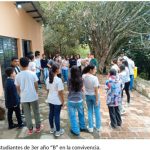
Involving the family directly in the school routine gives them a sense of belonging. Thus, the mother of a student was invited to share her personal story about autism, fostering empathy and solidarity among classmates. Likewise, the family had the opportunity to participate in various events, such as the Calasancias Olympics, the opening race, Easter celebration day, and the family picnic, among others.
- Integration activities during meetings.
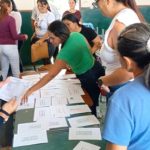
Report card distribution is when attendance is highest; therefore, it is valuable to use that time to break the ice, build unity, and reflect on the role of parenting.
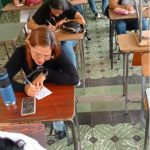
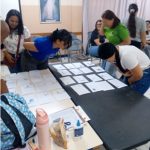
Report card distribution is conducted in a dynamic, reflective, participatory, and fun manner; it is a moment of love and connection. At the first meeting, we asked parents to search among thousands of gazes for just one—that of their child—because when there is love, you don’t need to see the whole face. Eyes don’t lie, nor does a parent’s love; at the second meeting, the activity involved identifying their children’s qualities; afterward, they were given a sheet with the silhouette of their child’s face, and they had to draw based on the prompt “this is how I always want to see you”; finally, they chose from a heart made of pacifiers placed on the board whatever they needed (love, patience, authority, God, a break…). These simple activities allowed us to make the most of the time and helped parents see the importance of their role.
- Educational Workshops (Parent School)
Learning sessions have been held on key topics for student development; that is, the school continuously offers training workshops led by specialists to help parents with responsible parenting, including parenting styles, how to set boundaries with love, and related topics.
To effectively conclude this school-family integration day project, the methodology focused on valuing achievements and future commitment. Gathering feedback has helped us understand that we must work together to achieve success. The implementation of this initiative was made possible by the support of the multidisciplinary team, where the guidance teacher’s motivation has been vital and remains crucial.
Reflection: School and family work together.
Remember: Education is like a bridge; at one end rests the home and at the other the school, both founded on the solid rock that is Christ. If one of the two foundations fails, the bridge wobbles; conversely, when both remain united and firm, our young people can walk happily toward the future.