LEARNING FOR AND THROUGH SERVICE
F. Adalbert Fouda. Pious Schools Congo.
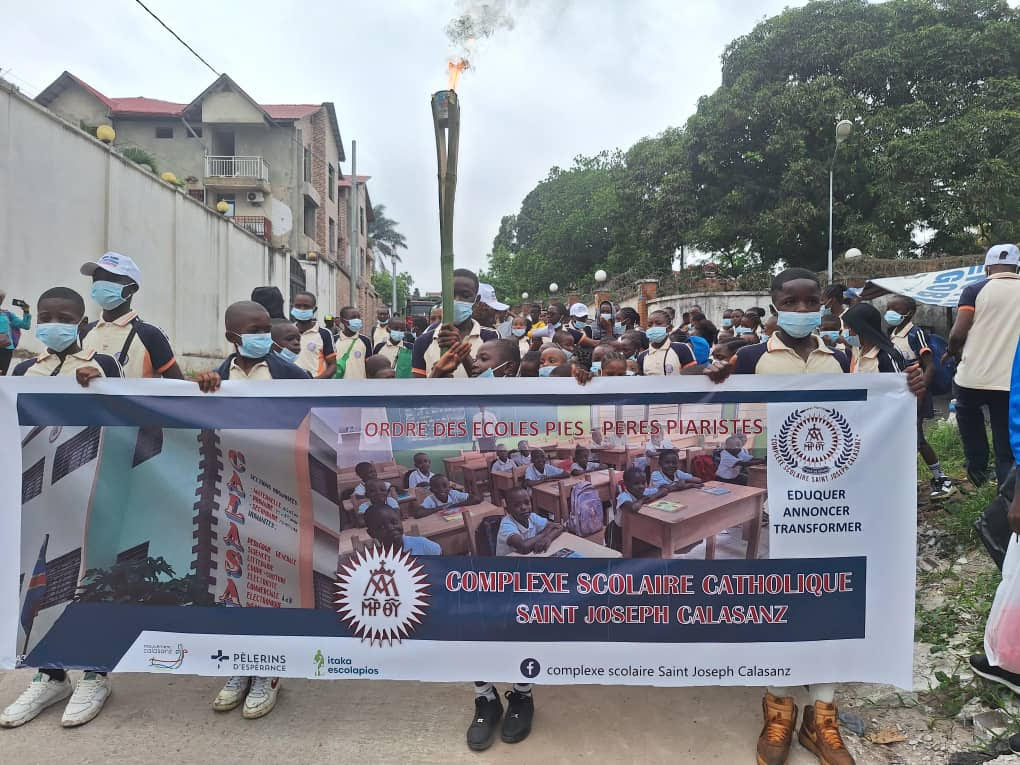
At the beginning of the 2024-2025 school year, the Piarists inaugurated the St. Joseph Calasanz School Complex in Kinshasa, in the Democratic Republic of Congo. This is an example of the bold and patient growth that the Pious Schools are undertaking in this part of Africa. Following the DNA of the Piarist educational style, the academic vision of this school is summarized in this trilogy: Educate-Announce-Transform. It is, therefore, a school that promotes an integral education (piety and humanities), based on Gospel values with a view to social transformation.
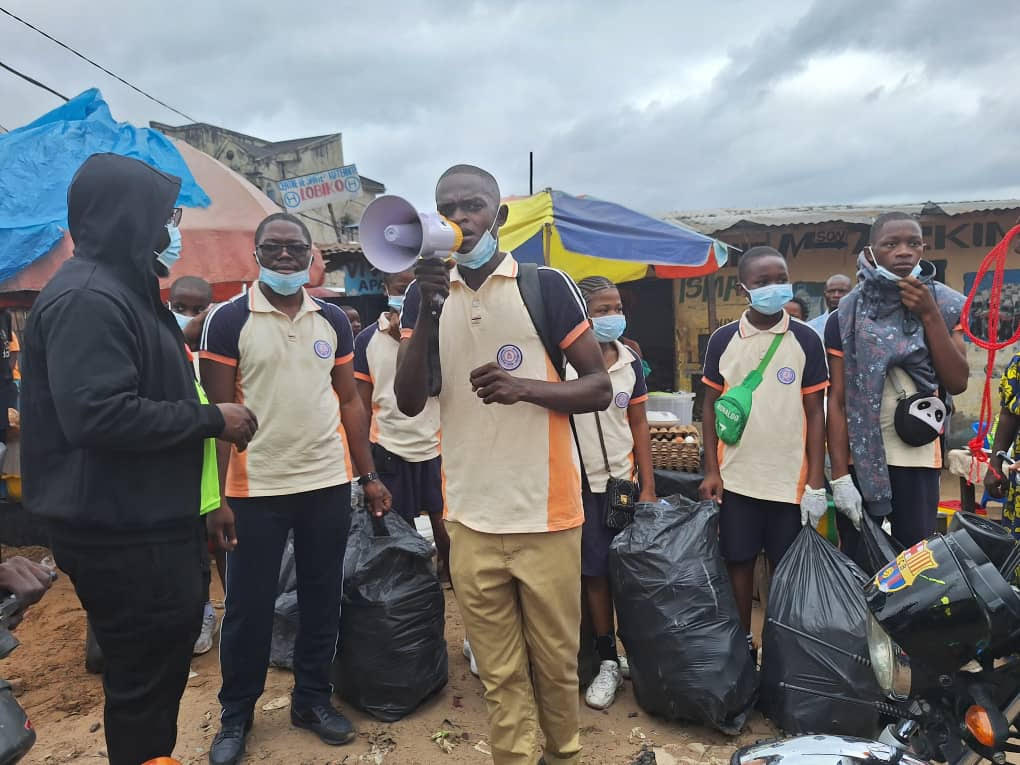
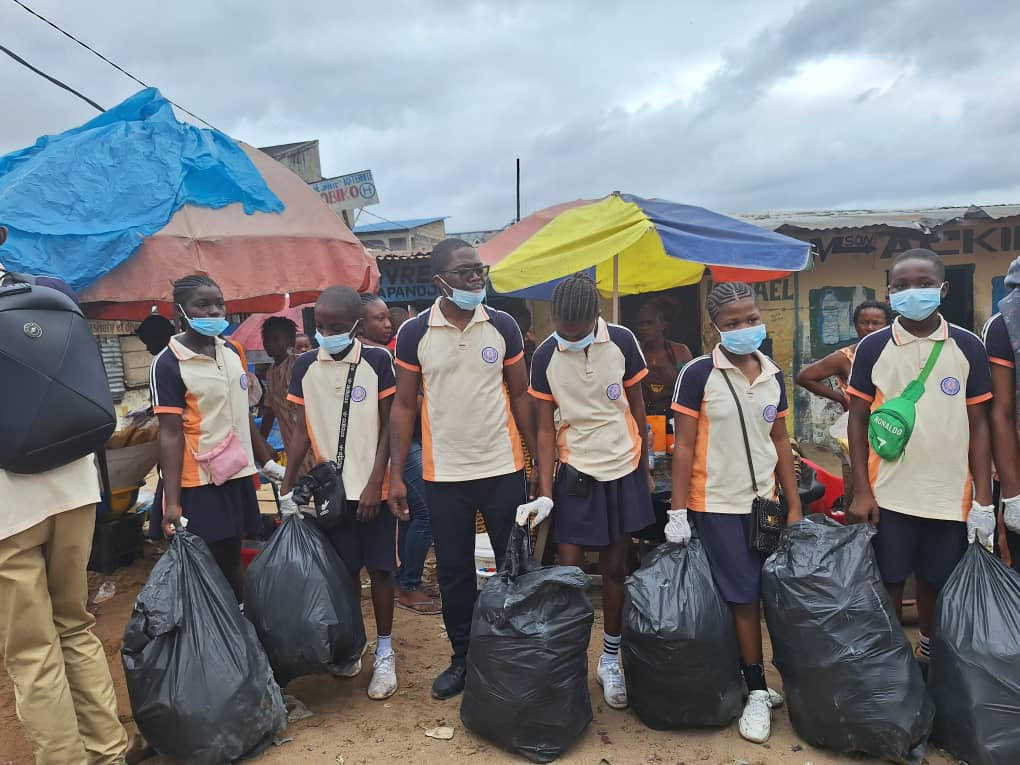
Defining itself as a “school for life,” our school complex carries out activities that promote the lives of students, teachers, families, and the surrounding community. Here, we share with you one of its significant educational experiences: an awareness-raising project on plastic waste management, which involves cleaning the streets and ditches of the Manenga neighborhood, where the school is located.
Insalubrity reigns in the Manenga neighborhood in Kinshasa, where the Complexe Scolaire St Joseph Calasanz is located. It is a very dirty neighborhood, with the loss of human lives caused every year by floods in the city, destroyed houses that push people into the streets, domestic waste contaminating the streets and gutters, diseases caused by mosquitoes, and pollution.
Our commitment as a “school for life” is through actions that promote life by reducing the risks of flooding caused by plastic waste, pollution that causes diseases, and erosion caused by runoff water (putting families on the street and making them even poorer)—the duty to raise public awareness of the need to maintain a healthy environment.
Objectives:
– To cultivate awareness and value in the educational community of caring for our “common home” (environment), following the invitation of Pope Francis (Laudato Si).
– To sensitize families to the impact of human action on life and the environment, the dangers associated with the misuse of plastic waste.
– To teach our students and teachers the value of service by cleaning the streets and ditches of the neighborhood.
Methodology:
– Observation: We observed the general behavior of the people in the neighborhood and noticed that a lot of domestic waste was thrown into the street.
– Analysis: During the rainy season, all this garbage in the gutters prevents water from flowing down to the river, causing erosion (the neighborhood is located between two hills), flooding, and pools of contaminated water (a source of mosquitoes and malaria). Organic waste decomposes, while plastics clog the gutters or are washed onto the road by the force of runoff water (littering the public street).
Action: We have taken steps to change our mentality and clean up the environment, inform and raise awareness (values), and then take action.
Implementation:
Oratory: through the Word of God in continuous prayer, we teach the value of respect for life, service, caring for others like Jesus, who fed the multitudes and healed the children….
In the classroom, we draw on the Life, Earth Sciences, and Geography curricula to sensitize students to the effects of human action on environmental degradation, using the target environment as an example. We invite them to take concrete actions that can progressively lead to a sustainable solution.
Preparation: After delimiting the target area, we prepare the materials that we will use to carry out our project (garbage bags, protective mask, safety rope, crews, banner, megaphones, music band, etc.).
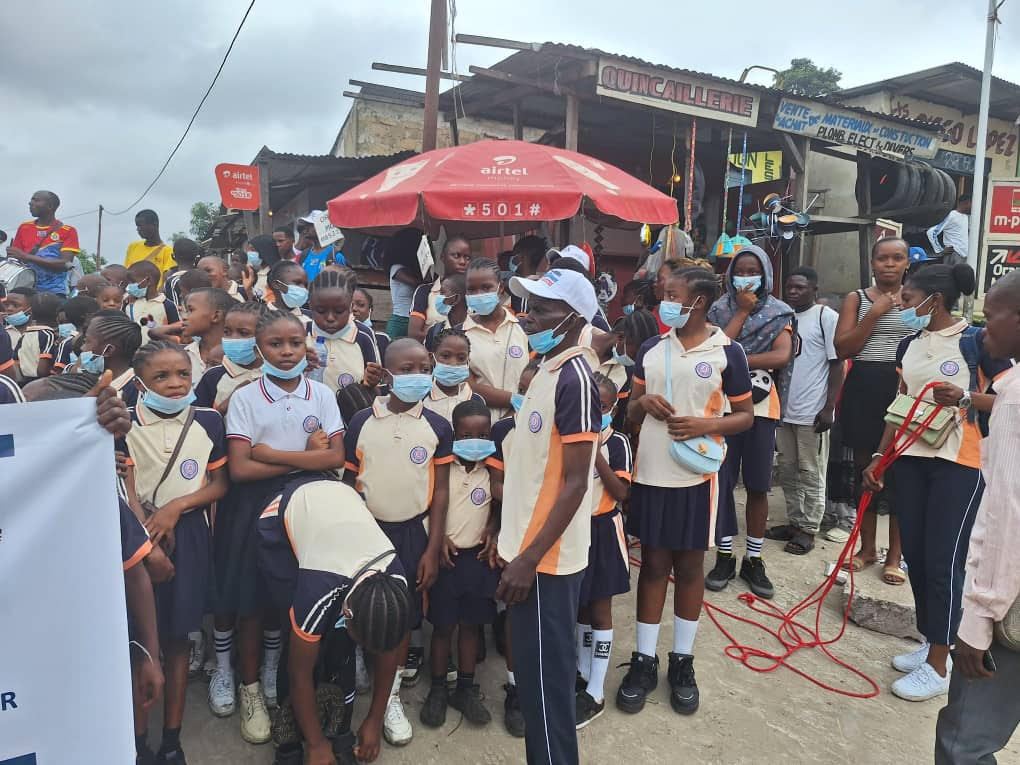
Activity: descent to the site (main avenue of the neighborhood), meeting, orientation, and implementation; garbage collection, awareness raising with megaphones, and march with a music band to call the population (over a distance of about 3 km).
Timeline:
– Date: November 4 to 25, 2024 (3 weeks).
– Estimated time: 15 hours, i.e. 5 hours invested per week.
– Results and evaluation
– Gutters unblocked (no flooding was observed after the rains of the days following the activity).
– Streets and gutters were left very clean (creating a more pleasant environment)
– The population was positively impacted and felt challenged (there was a noticeable change in behavior, less litter in the street)
– Awareness (some people voluntarily got involved in the activity while it was carried out).
– Students and teachers are satisfied with participating in a helpful community project.
– Innovation: making recycling bins with the collected plastic waste.
Impact and relevance
This initiative has been a wake-up call for other schools; it has raised awareness among the local population, and a change of mentality has been observed in some households and among some people (store clerks throw less and less garbage on public streets).
Conclusions
– The entire educational community (students, teachers, families, etc.) liked and appreciated and became aware of the initiative.
– Indeed, we have conveyed a message: to act is to educate.
– Education for social transformation is a pearl that can re-humanize our educational system, bring something new to it, and even be a factor in the development of our local community. Students and teachers have become aware of the importance of education in values and of the vision of the Piarist educational model: educate-announce-transform!