United by Jesus. Catechesis with a focus on playful learning
Otilio Ramón Herrera Ruiz. Pastor of Our Lady of Guadalupe. Mexico City
The parish of Our Lady of Guadalupe, south of Mexico City, is an urban community, simple and joyful. The Piarists have been present there for more than 40 years and our emphasis on catechesis, children’s groups and youth groups has been one of the ways of incarnating the charism among the parishioners.
In recent years, we have faced a major problem: the low attendance and participation of the children of the community in parish catechesis. This may be due to several factors, among which was the semi-schooling approach of our catechetical sessions. There is also the low intention of parents to invest time in the Christian formation of their children, asking that the sacraments be celebrated after a shorter and shorter period of preparation.
We asked ourselves the question: could we change the dynamics of our parish catechesis to make it more attractive and closer to the children, while joining as a team with the parents to encourage the notion of “process” in the formation of their children? How could the elements of the Calasanz Movement contribute to this?
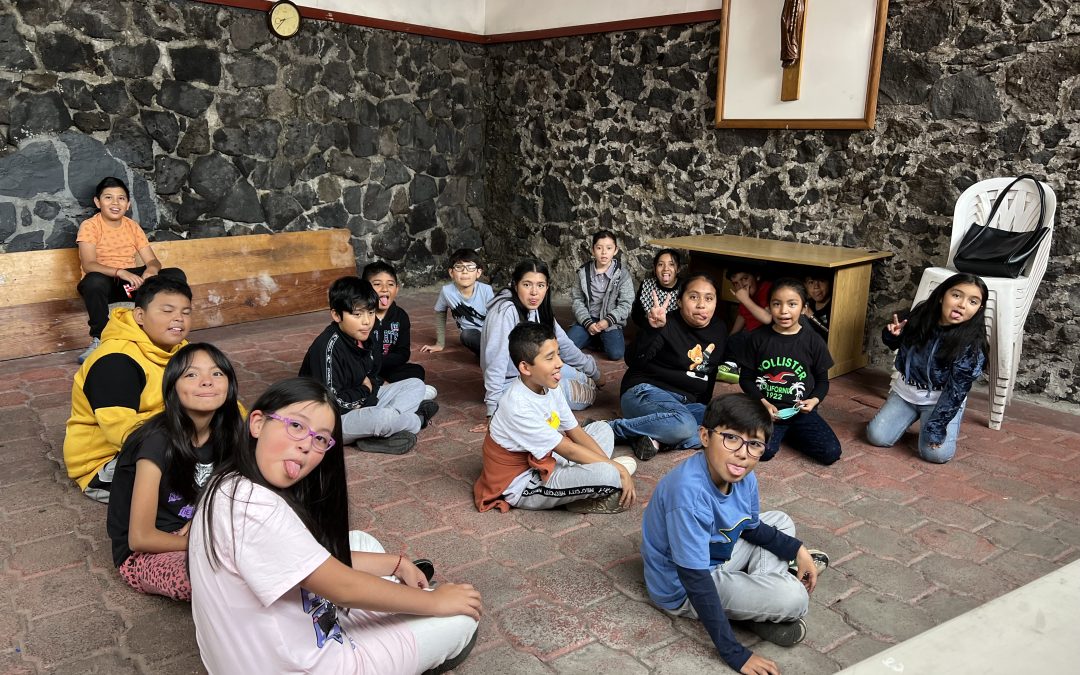
As of August 2024, we have implemented a modality in the sessions that includes elements of the Calasanz Movement and employs the playful learning approach to make them more attractive to the children. In addition, we have sought to integrate elements of practical liturgical formation into the Sunday Masses with the catechetical children.
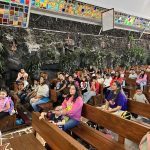
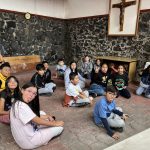
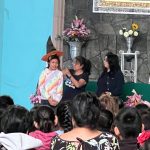
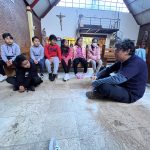
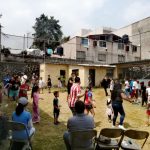
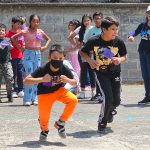
The session includes five areas or bases, arranged as a circuit or rally. In each base, the children develop a game or dynamic, listen to a story or brief explanation, dialogue about the contents of the day, applying what they learn in the game, and reach simple conclusions that synthesize the theme treated.
The areas are: teachings of Jesus, selected topics, human formation, salvation history and continuous prayer. The area of Jesus’ teachings addresses what he does or says in the gospels, seeking to familiarize the children with the way of life that Jesus preaches, lives and invites those who follow him to assume. The area of selected topics has the typical content of the classic catechism in Mexico: commandments, sacraments, etc. The area of human formation seeks that the children learn Christian values through dynamics that help them to better understand their inner world. The salvation history area tells them stories of God’s friends and their teachings. The area of continuous prayer implements this way of prayer as it is promoted in the Order.
The children are organized into four small sub-groups, which take the name of one of the evangelists. Each sub-group has its own mystique and is coordinated by one or two catechists or monitors. During the Sunday Eucharist, the children say their home cry and sit together. On special occasions, we set aside part of the session for them to have a sharing space, called Capernaum.
These changes meant a series of adjustments in the paradigm of catechesis that we had had until then. The catechists, the Archdiocese, the parents and the community itself have been factors to take into account.
On the one hand, we worked with the team of catechists of the parish, who at the beginning showed resistance to the change, fear of not being able to assume the new style, disbelief of the children’s learning in this model and difficulty in understanding the notion of the “areas” that were proposed. We had a month of preparation with the catechists, in which we presented the work methodology in practical sessions that allowed them to know and experience at the same time what the children were going to experience in the sessions. It was not until the second session with the children that they saw the benefits of this change and realized that they could do this work with them. Every Tuesday, we met for an hour and a half to plan the next Saturday’s session.
On the other hand, the way of doing catechesis in the Archdiocese is thought in a five-year cycle, schooled, using the books and materials authorized by the Archdiocese.
So our approach is different, but it has sought to include the basic objectives and respond to them from the reality that confronted us.
Parents have responded well to our approach. They have commented that their children are happy in the catechetical process, that they like to come and then tell them about what was discussed in the session. These are good signs. In addition, they bring the children and are concerned about having constant communication with the monitors. The biggest challenge with them is to reinforce the notion that the celebration of the sacrament does not end the formation process, nor does it end the relationship with the community.
The children, for their part, have been building their knowledge in these sessions. The Sunday masses reinforce the content and stimulate the mystique of the houses.
Each has a small banner that one of the children carries in the entrance procession. They like to participate and more than one arrives early to take the banner. It is hoped that the children themselves will build a sense of belonging to their home and to the group, that they will persevere and see this process beyond the sacramental celebration they are preparing for, and that they will probably bring their parents if they are motivated to continue.
The elements that the Calasanz movement brings to the catechetical formation in the parishes enrich the process of our children. The main objective is to build a small community that can then grow in belonging to and serving the parish community. It is a bet on the future, and hopefully it will bear fruits that will give greater Piarist identity to the parish.