
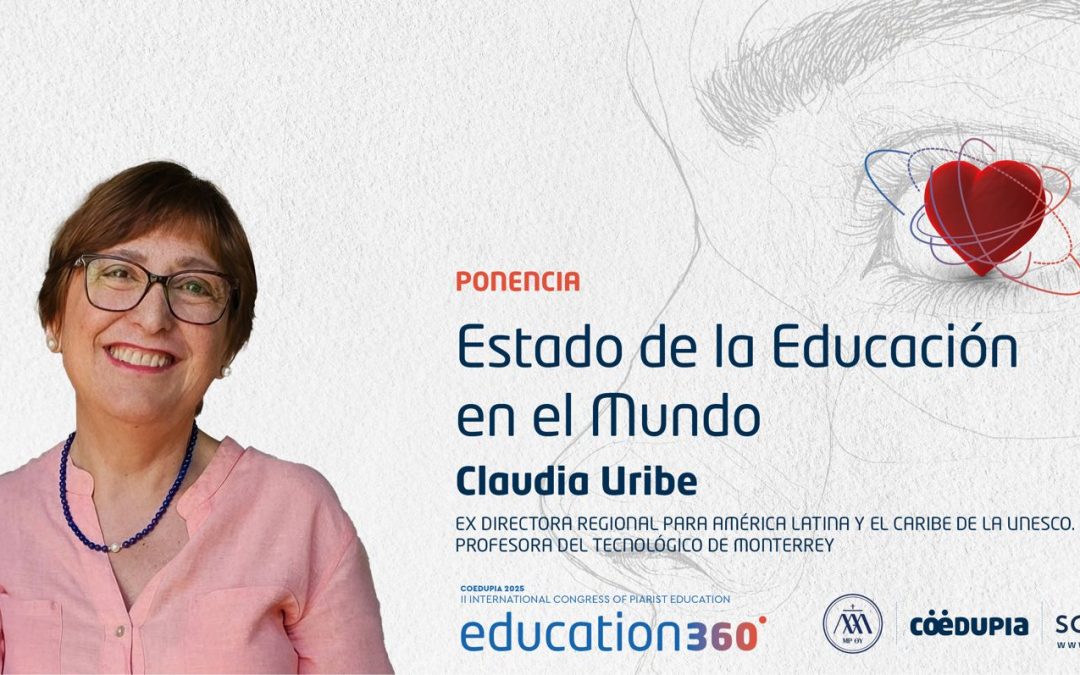
State of Education in the World
Claudia Uribe. Former UNESCO Regional Director for Latin America and the Caribbean. Professor at Tecnológico de Monterrey
With only five years to go before the deadline set by the United Nations 2030 Agenda for Sustainable Development, a detailed review of the progress and challenges in global education is required. The goals agreed by countries in 2015, among which is Sustainable Development Goal 4 (SDG 4), seek to move towards equitable and quality education for all throughout life. This goal is essential because education is a fundamental pillar for sustainable development, promoting equal opportunities and empowering people to reach their potential and contribute effectively to society and the sustainability of the planet.
Quality education, as stated in SDG 4, is not only about access to education, but also about improving learning outcomes and ensuring that all people can reach their full potential. According to recent UNESCO reports, progress in improving the quality of education has been uneven. Some countries have made significant progress, especially those that have implemented inclusive policies and increased investment in education. However, in many regions of the world, challenges persist, and millions of children and youth still lack access to quality education.
One of the main indicators that the 2030 Agenda closely monitors is the school enrollment rate. Although there have been improvements, with an overall increase in primary education enrollment, dropout rates remain alarming, especially in contexts of conflict and humanitarian crisis. Moreover, gaps in access to and retention in education persist in several parts of the world, disproportionately affecting the poorest and most vulnerable and also fueled by young people’s disenchantment with education that leads them to drop out.
Financing is another critical factor slowing educational progress. Many developing countries face severe budgetary constraints, affecting school infrastructure, the availability of educational materials and the quality of teaching. The COVID-19 pandemic exacerbated these constraints, as governments had to redirect funds to the health emergency, leaving education on the back burner. UNESCO’s estimates suggest that significant investments are needed to restore and accelerate educational progress, and call for international cooperation to support countries with the greatest needs.
The digital divide has emerged as a significant obstacle on the road to equitable and quality education. Access to technology and the Internet has become a sine qua non for learning in the 21st century. The pandemic highlighted inequalities in access to digital education: while in developed countries many students were able to continue their education virtually, in developing countries millions of children were left disconnected and without access to educational resources.
The issue of teachers is central to the discussion on educational quality. Teachers are key agents in the teaching-learning process, and their training and well-being are fundamental to achieving educational objectives. However, many teachers around the world work in precarious conditions, with low salaries and little continuous training. According to the latest UNESCO report, there is a shortage of approximately 44 million teachers worldwide to make it possible to achieve the SDG 4 targets. This shortage of qualified teachers is a major obstacle to ensuring quality and equitable education worldwide. UNESCO stresses the need to invest in the professionalization of teaching careers, offering better working conditions, professional development opportunities and recognizing the importance of their role in society. It is imperative to mobilize and encourage more young people to choose teaching as a profession, as the declining interest in it jeopardizes the ability of education systems to provide educational services to the entire population that requires it.
In addition to the above factors, it is essential to reflect on the state of education for sustainable development and global citizenship. These components are transformative and key to the global agenda, as they prepare students to face the challenges of the contemporary world, promoting values of sustainability, peace, respect for diversity and civic participation. Education for sustainable development fosters a critical understanding of environmental and social issues, and empowers people to make responsible decisions and actively contribute to a more sustainable future. Global citizenship education promotes an identity based on mutual respect, justice and international cooperation, preparing students to be informed and engaged citizens of their local and global communities.
In summary, as we approach 2030, we can see that, although the world has made significant progress in education, inequalities and low levels of learning persist in much of the world, and it is increasingly clear that we will not achieve many of the goals we set for ourselves as humanity. The challenges are numerous and complex, and overcoming them requires the cooperation of all stakeholders, from governments to civil society and the international community. Only through collective commitment and concrete action can we ensure an education that empowers all people, everywhere, to build a more just, inclusive and sustainable world.
