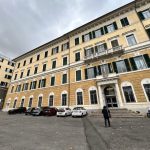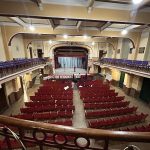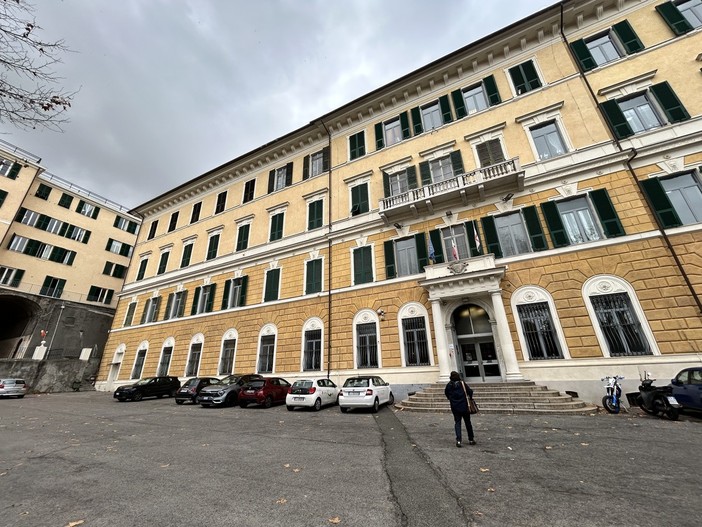
From DADA teaching to personalized attention to students, from its four centuries of Piarist history to the cultural and sports facilities in Cornigliano: this is how the school, run by teachers and priests, earned first place in the Agnelli Foundation ranking. “Every child should be able to find the space to develop their best version.”
Calasanzio is the best humanities high school in Genoa according to the 2025 edition of Eduscopio, the Agnelli Foundation’s tool that evaluates the effectiveness of educational institutions in preparing students for university life. For the Cornigliano high school, this result is not just a medal to show off, but a confirmation of the value of an educational project built day by day, with care, dedication, and a vision that combines innovation and tradition.
The Eduscopio data reflect the school’s ability to guide students in their transition to university: it is not only grades that matter, but also the strength of the curriculum, the continuity of studies, and the quality of the results obtained in subsequent years. These figures, the school explains, certify “a school that prepares, guides, and supports.”
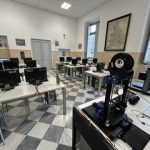
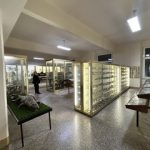
Among the elements that distinguish Calasanzio is its long history with the DADA method: Teaching for Learning Environments. This approach revolutionizes traditional logic: it is not the teacher who moves, but the student. Each teacher has their own environment, designed and characterized by the subject they teach, transformed into a living, thematic, and coherent space. Philosophy in an immersive classroom, art surrounded by color, mathematics among graphics and digital tools
Lessons are interactive, participatory, and often complemented by multimedia tools that accompany the discussion. Movement, changing spaces, and entering different environments at different times alter the perception of time, reduce immobility, stimulate the senses, and reduce attention dispersion.
The model was born in the city even before the pandemic: a group of teachers got together to reflect on the situation, looking for a teaching method that would unite them. From that perspective, they say, two teachers left for a pilot school near Rome; upon their return, the journey began. Today, it is one of the school’s distinctive features.
Una escuela que es una comunidad: “Los niños necesitan sentirse vistos, acogidos y escuchados”.
A school that is a community: “Children need to feel seen, welcomed, and listened to.”
Academic Director Dr. Laura Castella describes Calasanzio as an ecosystem that must function in all its aspects: “We work to increasingly integrate families. Those who come here are looking for an environment that offers true stimulation. It’s demanding, yes, but there’s a strong idea of making the school a community for parents as well. It’s not just about teaching children: we need to support adults, stimulate reflection, and get them to think collectively. And that’s incredibly difficult.”
The added value, she explains, is the collaborative nature of the work: “There’s a very close-knit group behind it: Father Mario, the teachers, the staff. Sharing tensions and difficulties drives us forward. We know all the children by name. They come to the office, tell us things about themselves, and you understand how much they need an adult who will listen to them without judging them. Many parents, no matter how attentive they are, sometimes don’t recognize this: they are very well cared for, but they are not very responsible.”
The balance between care and responsibility is delicate: “Combining rigor and passion is what allows them to thrive. An example? A child with a score of 104 was fully integrated, pursuing his passions, finding his place. This involves working with the individual: getting to know them on an educational level and as a person. And, when necessary, delegating to those who know best how to do it.”
The method is clear: stimulate desire, don’t force them to repeat it by heart: “It makes no sense to memorize a lesson learned by heart. You have to hook the person. We don’t do favors: we are a private school, but if there is a failure, we fix it. Skill development is a serious process, and consistency comes first.”
Father Mario: “Eduscopio observes how the children are doing afterwards. And we teach them to walk.”
The director, Father Mario Saviola, links Eduscopio’s leadership with the vision of the Pious Schools: “Eduscopio does not focus solely on grades, but on how students actually perform in their university careers. For us, the motivation is clear: they must learn to progress, to make the most of what they have, to navigate complexity. And this is based on consistency in their work.”
The motto of St. Joseph Calasanz remains central: “Children educated from an early age in piety and letters will have a happy life”: it is a principle that has endured throughout the centuries.
Dialogue as an educational tool: “We do not grow up alone.”
One teacher highlights the central role of relationships with families: “Schools cannot alienate parents. Today we are experiencing a constant educational and emotional crisis: if there is no dialogue, even with all the attention in the world, the work remains incomplete. Children need a support network.”
And with regard to classes, she adds: “Everything is possible: they should not feel caught between a rock and a hard place. If we accustom them to the idea that they will encounter barriers after high school, we will hold them back. School is about providing tools, not generating fears.”
Published on December 14, 2025, in the digital newspaper “La voce di Genova.it”