Calasanz: a received and shared identity
Directors’ meeting. Cristóbal Colon University. VERACRUZ (MÉXICO)
Edmundo Gómez Martínez. Comunication
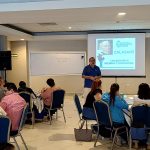
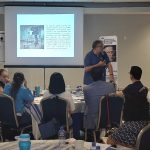
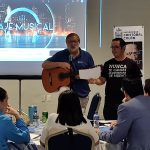
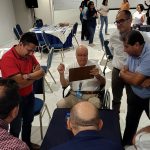
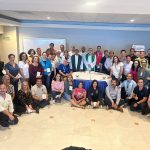
On June 19 and 20, 2024, the Universidad Cristóbal Colón, in Veracruz, Mexico, summoned the personnel responsible for academic and administrative directions for a formative meeting: “Calasanz: a received and shared identity”. The rector, Fr. Francisco Javier Alonso Arroyo Sch. P., invited the participants to reflect on the importance of Calasanz, The methodology of the meeting was a series of testimonies, infographics, readings and questions to be discussed and commented by groups at each table. The need to develop a training plan for Piarist collaborators was emphasized, without distinction between academic and administrative, starting with the induction of all new staff. Formation is a fundamental tool to promote identity.
The life and contributions of St. Joseph Calasanz, founder of the first public, popular and free school, the origin of the Pious Schools, as well as the current presence of the Piarist Order, with works in 43 countries on four continents, were discussed. Alonso warned about the difference between saying “I am a teacher” and “I work as a teacher”: “Those who really have a vocation have a vital and profound experience; this is what gives value to an educational institution and what Calasanz discovered: if we do not have people like this, it will not work. If you haven’t discovered this vocation of service you can’t transmit it to the kids.” And he added: “What gives meaning to your life is the story, the narration. Whoever has a good story knows how to interpret. We are born in a community of stories, where the dominant one has been Christianity with its understanding of life, death and suffering. The stories of the Bible tell something that belongs to human nature, they are an inspiration to understand what we live and to manage our lives. Very significant for us is Joseph of Calasanz, whose narrative is inspiration and example to understand our own life and vocation.”
Some elements of the Calasanctian identity of the educational works of the Pious Schools were recalled: a focus on children and young people, the shared mission, the sense of belonging to the Church, the proclamation of the Gospel, accompaniment and the reform of society. Piety was not limited to prayer, but included moral teaching, virtues and good manners, as well as literature (grammar and mathematics, among other knowledge). Calasanz collected the best of the science and culture of his time, including contributions of Humanism to apply it to popular education, being the first saint to generate a pedagogical heritage of great dimensions.The meeting was an opportunity to present the Institutional Development Plan 2024-2028 that will guide the management of the University, as a result of a collaborative work of the various areas. “A map – as the presentation reads – that will guide the institution in fidelity to the Christian and Calasanctian principles that give it its foundation”.
There was a space to propose adjustments to a model of the exit profile of the UCC student formulated in the Governing Council based on competencies related to the Piarist seal to be integral, spiritual, supportive, participative, responsible, competent and creative. The rector mentioned that the Pastoral Center plans to combine administratively a series of voluntary activities, also of a non-formal nature, offered to students throughout their degree, with the additional motivation of a certificate that will enable them to enrich their curriculum upon graduation and their life project.during the conference, various recreational activities were carried out to encourage coexistence and communication.to end the meeting, the group celebrated the Eucharist as the best expression of communion that an educational community can have.