Calasanz Guadalupe After-School Program: A Project Finding Its Footing.
By: Julio Carreón Rosas / Lay Piarist of the Piarist presence in Apizaco / Tlaxcala / Mexico.
The Piarist presence in Apizaco (Mexico) was founded over 64 years ago and has since developed various educational projects in both formal and non-formal settings. In the formal sector, the most important initiative is the Fray Pedro de Gante Institute (IFPG), an educational institution offering programs from preschool through high school. In the non-formal sector, notable initiatives include the creation of children’s and youth groups within the Calasanz Movement, homework help, sports promotion, mission groups for Holy Week, after-school sports and cultural programs, the Leadership Workshop, and many others. As Chargoy-Espinoza noted in 2023, both formal and non-formal education are crucial for children’s development—both individually and collectively—opening doors and creating opportunities. It is necessary to address the challenges in each of these areas to achieve equitable and sustainable development. The Piarist presence has understood this very well and will continue to work in support of these two ways of transmitting the Piarist charism.
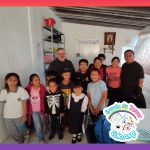
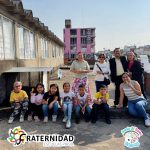
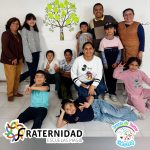
Driven by the Apizaco community’s commitment to non-formal education projects, in 2025, members of the Piarist fraternity and volunteers from the IFPG launched the Calasanz Homework School (ETC) with the support of the Vice-Province of the Californias, the model’s founders, who bring 25 years of experience. With the support of some benefactors, we found a room on the second floor of the Guadalupe Market, a commercial building located about 500 meters from the IFPG. Thus, on Monday, September 8, 2025, activities began at the Calasanz Homework School at the Guadalupe Market with the support of a group of volunteers.
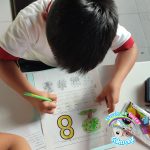
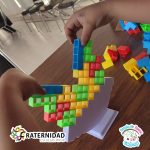
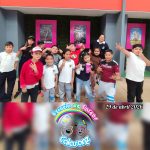
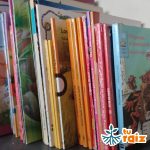
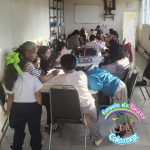
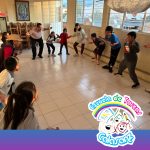
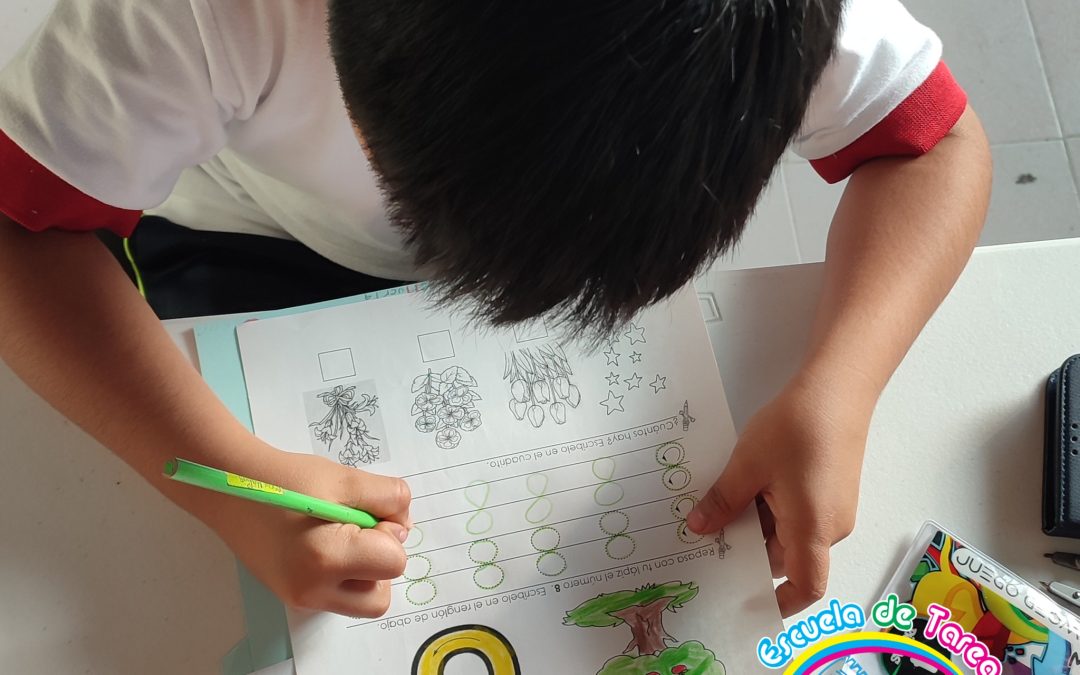
The children arrive on Mondays and Wednesdays from 4:00 to 6:00 p.m. Each session begins with a group game, followed by Spanish and math worksheets tailored to their performance in these areas, and concludes with a small-group board game. A love of reading is also fostered through the “Rincón del León” program, in which each child chooses a book based on their reading level and interest. After the child reads the book on their own at home or at the ETC, a volunteer listens to them and discusses the story; for this, the child earns a star that is placed on a board with their name. The ETC project is enriched with meaningful activities tailored to the school year’s schedule: Day of the Dead, a Christmas posada, and Children’s Day, which was celebrated by attending a movie at a theater near the center—a memorable experience for the children.
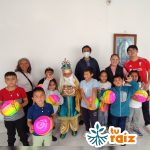
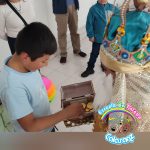
Since its inception, the ETC at the Guadalupe Market has received various forms of support: educational materials, candy donations, gifts, piñatas, and celebrations. There has been great generosity in the form of donations from market vendors. There are also benefactors who have learned about the project and occasionally contribute various donations.
A major challenge for the ETC is involving the children’s families in the project. This has not yet been achieved, as the children almost always arrive and leave on their own; there is no opportunity for dialogue with the parents, nor is there anyone to leave in charge of the business during training sessions. A priority for the volunteers and the project’s leadership is to offer parents ongoing training related to child-rearing, thereby reinforcing the work being done on behalf of their children.
One very important area to strengthen within the ETC is to formalize and expand the volunteer group, so that volunteers can receive ongoing training to develop an “authentic and profound spirituality to carry out their vocation more effectively” and so that their volunteer work comes from a free heart devoted to each of the children in this project, thereby embodying what our founding father desired for his schools: teachers with spirit.
The ETC at the Guadalupe Market is a project taking its first steps and learning a great deal about the population it serves, most of whom are children of stallholders and street vendors in downtown Apizaco. Undoubtedly, it helps the children with their homework, provides reinforcement in math and Spanish, and develops their social and concentration skills; but above all, it gives them a weekly four-hour space in a safe environment where they can forget, if only for a little while, about the work they share with their families in their businesses and stalls, allowing them to focus on the most important task they must learn at this age: to be children.