Humanistic Education: Piarist Identity at UCC
By Pedro Octavio Reyes Enríquez. Director of Holistic Education
Cristóbal Colón University (UCC) is a Christian-inspired university located in the port city of Veracruz (Mexico) and run by the Piarist Fathers. It was founded 57 years ago by Fr. Antonio Torrente, S.P., and grew out of the Cristóbal Colón School in response to demand from parents seeking to educate their children in the Piarist tradition.
The Alumni Project is currently being promoted. In ongoing discussions, graduates acknowledge that an education grounded in Christian humanism is one of the main strengths of their time at the university, as it has enabled them to excel in the workplace and develop holistically as individuals. Likewise, employers note that UCC graduates stand out for their values and competencies related to social awareness, ethical responsibility, and a commitment to transforming their surroundings.
Values education is a cross-cutting theme that permeates the entire curriculum of UCC’s academic programs. This approach is reinforced particularly through the Humanistic Education courses. Undergraduate programs include four such courses: Person and Meaning of Life; Transcendent Meaning of the Person; Society, Ethics, and Context; and Culture, Arts, and Identity.
Through these courses, students acquire knowledge of Piarist philosophy and Christian humanism, build their sense of life from an ethical perspective, identify contemporary issues affecting vulnerable populations, and analyze phenomena such as the decline in civic participation and democracy, corruption and ethical decay, the objectification of human beings in a performance-driven society, and the loss of reference points for the common good.
They also reflect on the devaluation of Mexican cultural heritage, the gap in access to culture as a social right, and the disconnect between identity and social life, among other relevant topics.
One of the greatest satisfactions in teaching and coordinating these courses is observing how students engage with their environment, propose solutions, and participate in organizations that support vulnerable groups or promote sustainable initiatives for social change. Similarly, they develop strategies to preserve elements of their environment’s cultural and natural heritage, integrating approaches specific to their fields of study.
This educational model requires a faculty with a profile capable of integrating knowledge from various humanities disciplines, promoting social awareness, and guiding reflection on identity, faith, and culture. All of this is aimed at generating alternatives to address social issues in the local community.
Faculty members are engaged in ongoing professional development. In particular, over the past two years, they have participated in Piarist training certificate programs offered by the UCC, which has allowed them to update their knowledge and strengthen the foundations of Christian education and the Calasanctian charism.
At the university level, students do not always perceive these courses as useful for their professional training; at times, they consider them unnecessary. In fact, some prospective students may not initially value their inclusion in the curriculum.
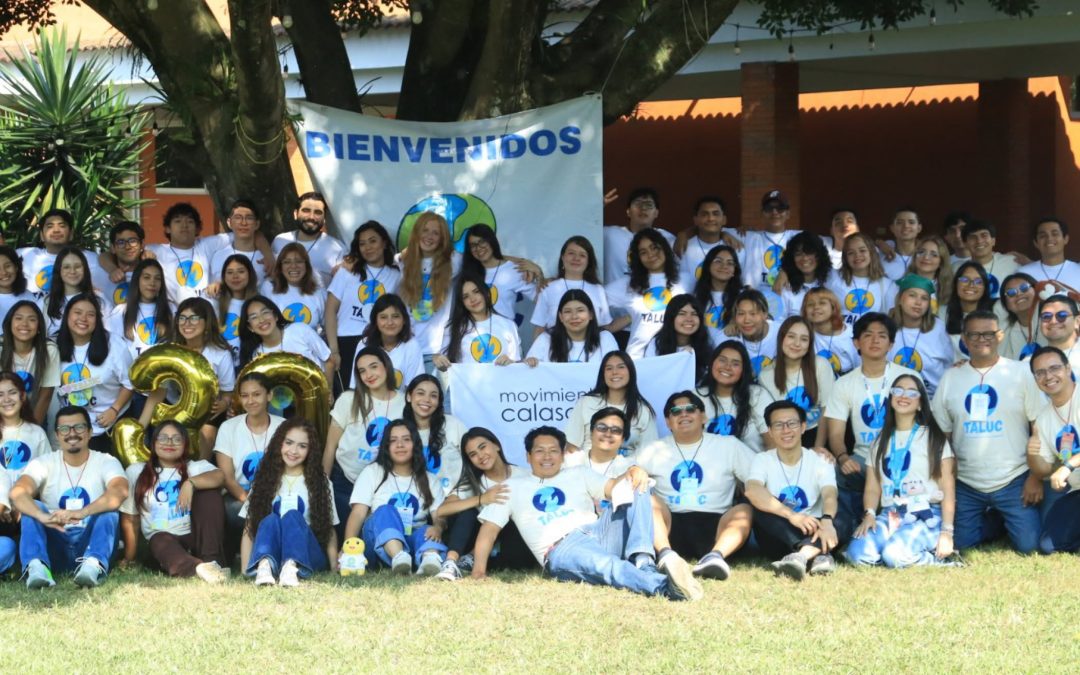
However, as they progress in their education, they discover the relevance of their studies to life, especially when they get involved in social projects and collaborate with people in vulnerable situations. Many of them join as volunteers and decide to directly support various organizations, including: the Veracruz Food Bank, Cada Niño una Sonrisa, the Calasanz Social Center, Itaka Escolapios, the Tony Foundation, Somos Más Decididos, Hogares Calasanz, the Veracruz State Blood Transfusion Center (CETS), the Friends of Jaime in Action Foundation, Centro de Ayuda para la Mujer Latinoamericana, UCC Social Volunteering, CICE Foundation, Mexican Association for Assistance to Children with Cancer, Bruno en Acción, Meraki, Fundación en Movimiento, COGRAA Shelter, Casa Santana, Casa Hogar San Rafael Guízar y Valencia, AJA Shelter, Casa MAM, Hogares por el Amor de Dios, and Reciclemos y Ayudemos A.C.
By participating in these projects, students develop key life skills, such as critical and sociopolitical thinking, the ability to analyze context and structure, and reasoned argumentation to understand complex issues. They also strengthen their ethical judgment and their ability to make responsible decisions in professional and civic contexts.
However, one of the most valuable aspects observed is the transformation in their emotions and attitudes: they develop social empathy, experience compassion for others, and strengthen their desire to contribute to others’ well-being. This process also raises existential questions, helping them understand that their lives can positively impact others, thereby strengthening their commitment to the environment.
Likewise, some students express outrage at social injustices affecting vulnerable populations; however, they recognize that they can help build a more equitable society and reduce inequality.
The UCC’s model of holistic education encompasses multiple dimensions. In addition to the contribution of humanities courses, various curricular and extracurricular activities are developed to strengthen the graduate profile.
Implementing this model is no simple task; it requires a shared commitment among students, faculty, administrators, and staff to work toward the common good. This vision responds to the legacy of Saint Joseph Calasanz and the founding purpose of the Pious Schools: to form individuals who, in their daily lives, act as true Good Samaritans.
Institution Address: Cristóbal Colón University has two campuses, the first located in the city of Veracruz and the second in Boca del Río. It was founded on January 6, 1969, and is part of the Cristóbal Colón Center for Studies.
It has approximately 3,000 students and 400 faculty members. Its academic offerings include 21 bachelor’s degrees in the full-time program, 6 in the part-time Saturday program, 16 master’s degrees, and 4 doctoral degrees.
Other activities complementing the academic program: It has various student groups focused on developing different aspects of professional and personal growth, such as the Calasanz Movement, Debate Club, IMEF-Universitario, and the University Student Council, in addition to more than 50 extracurricular activities in sports, the arts, social development, environmental culture, peace, and pastoral care.
Cristóbal Colón University is a place where young university students can embody the Piarist motto: “Piety and Learning.”
-
- default